A66 Northern Trans-Pennine Project
Catagory: Groundwater Control
Location: Cumbria, UK
Client: a.hak
Sector: Energy & Utilities
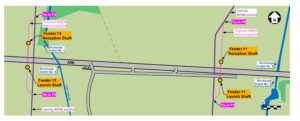
National Gas Transmission (NGT) appointed a.hak UK Limited (a.hak) to construct 2 No. gas pipeline crossings below the existing A66 Carriageway as part of the A66 Northern Trans-Pennine Project.
The two gas pipeline crossings, Feeder 11 and Feeder 15, were subject to time-critical gas outage dates, and were required in advance of National Highways significant upgrades to the existing Carriageway.

OGI Role
Specialist Design & Modelling
Technical Advice & Guidance
Regulatory Management
OGI Involvement
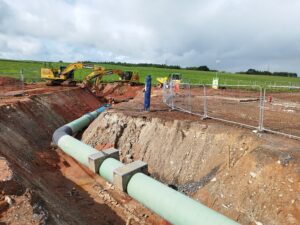
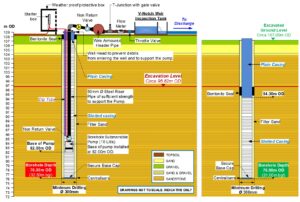
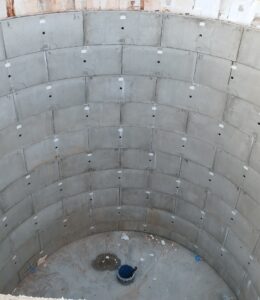
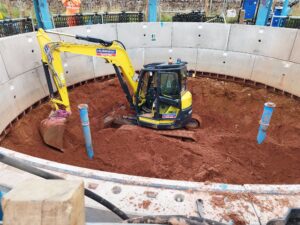
To enable installation of the Feeder Diversions, construction of 4 No. 9m diameter shafts was required, together with the construction of Tie-in Pits and connecting pipelines.
Monitored groundwater levels at the A66 Gas Pipeline Diversions Site were over 10m above the required excavation levels for shaft construction. In addition, the excavations on site were to extend through the variable Superficial Deposits, and into the permeable Penrith Sandstone.
Robust temporary dewatering was critical on site, to lower the groundwater level and reduce pore pressures below the excavations.
Test Pumping Works
The project was subject to time-critical gas outage dates, scheduled over a year in advance. Missing these outage dates could result in significant interruption to the UK’s Gas Supply. As such, OGI had to design and deliver within critical timescales.
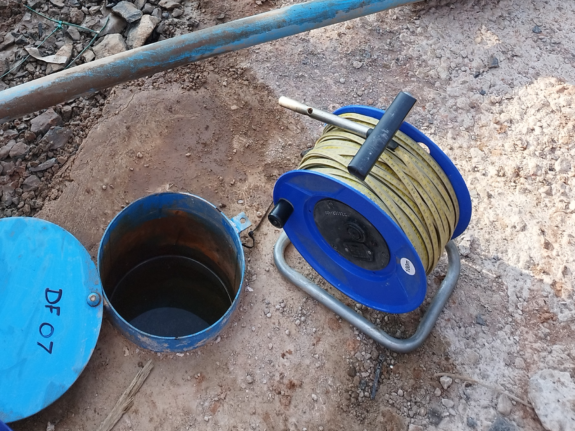
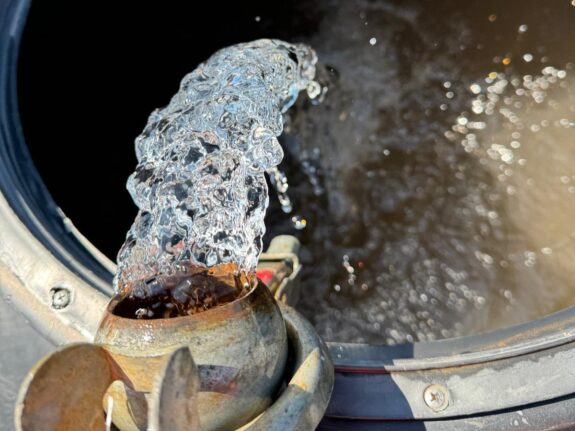
Early stage test pumping was critical to understanding the hydrogeological properties of the ground beneath the Site and to enable the development of a detailed Hydrogeological Impact Appraisal (HIA), as required by the UK Environment Agency.
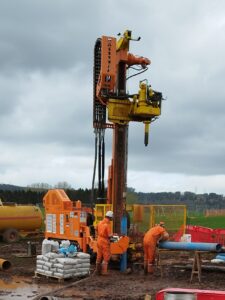
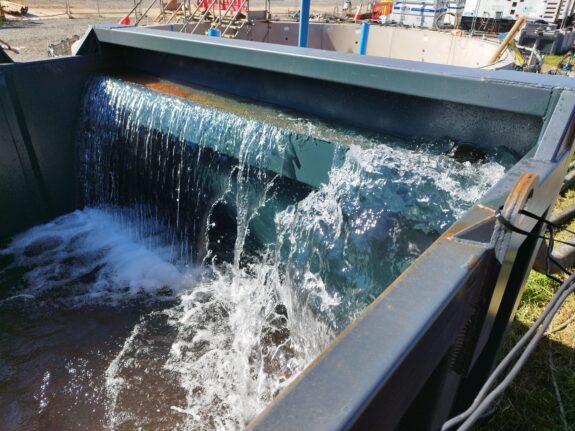
OGI designed, specified and oversaw the test pumping works on Site. In addition, OGI processed the test data in real-time, and analysed the results, to obtain accurate transmissivity values for the Superficial Deposits and Penrith Sandstone Deposits on Site.

Mathematical Modelling
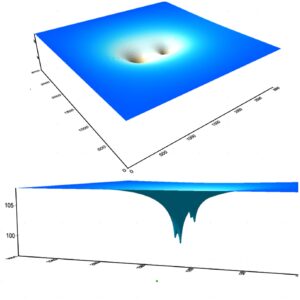
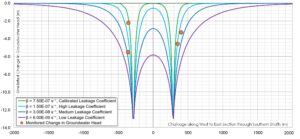
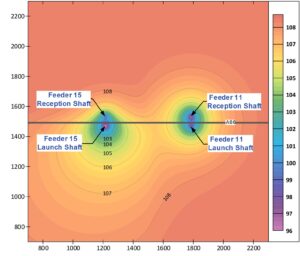
Based on the OGI test pumping analysis, OGI undertook groundwater modelling to enable the design of robust dewatering system designs for each shaft.
The modelling also enabled prediction of the steady-state abstraction rates required from the Temporary Dewatering Systems at the A66 Pipeline Diversions Site.
Modelling results confirmed that the ground underlying the sites was highly transmissive, meaning abstraction rates were likely to be significant during the main works (up to a total of 100 Lit/s).
Results from the test pumping informed all of OGI’s work that followed after, including all discussions with the EA, and the detailed groundwater control system design.
Technical Innovation
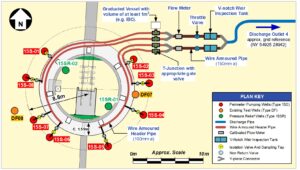
Detailed calibration modelling of the 4 No. OGI shaft dewatering systems was undertaken during test pumping. This demonstrated that pumping from the Perimeter Pumping Wells at each of the Shafts would sufficiently lower the groundwater level at the location of the 4 No. Tie-in Pits (located circa 75m to 110m from the shafts).
As a result, no stand-alone dewatering system was required for the successful open-cut excavation and construction of the Tie-in Pits and pipelines, saving time, money and resources.
Site Presence
OGI site presence during the project ensured positive relations with the dewatering contractor, Client, and all key stakeholders throughout the works.
When on site, OGI was able to provide assurance that the systems were being implemented as per the relevant design specifications.
OGI took responsibility to communicate with all the relevant dewatering bodies involved to ensure all environmental standards were adhered to throughout the dewatering operation.
As a result of the successful project delivery, OGI’s works expanded to support further works taking place on the main A66 Northern Trans-Pennine Project.
Project Gallery